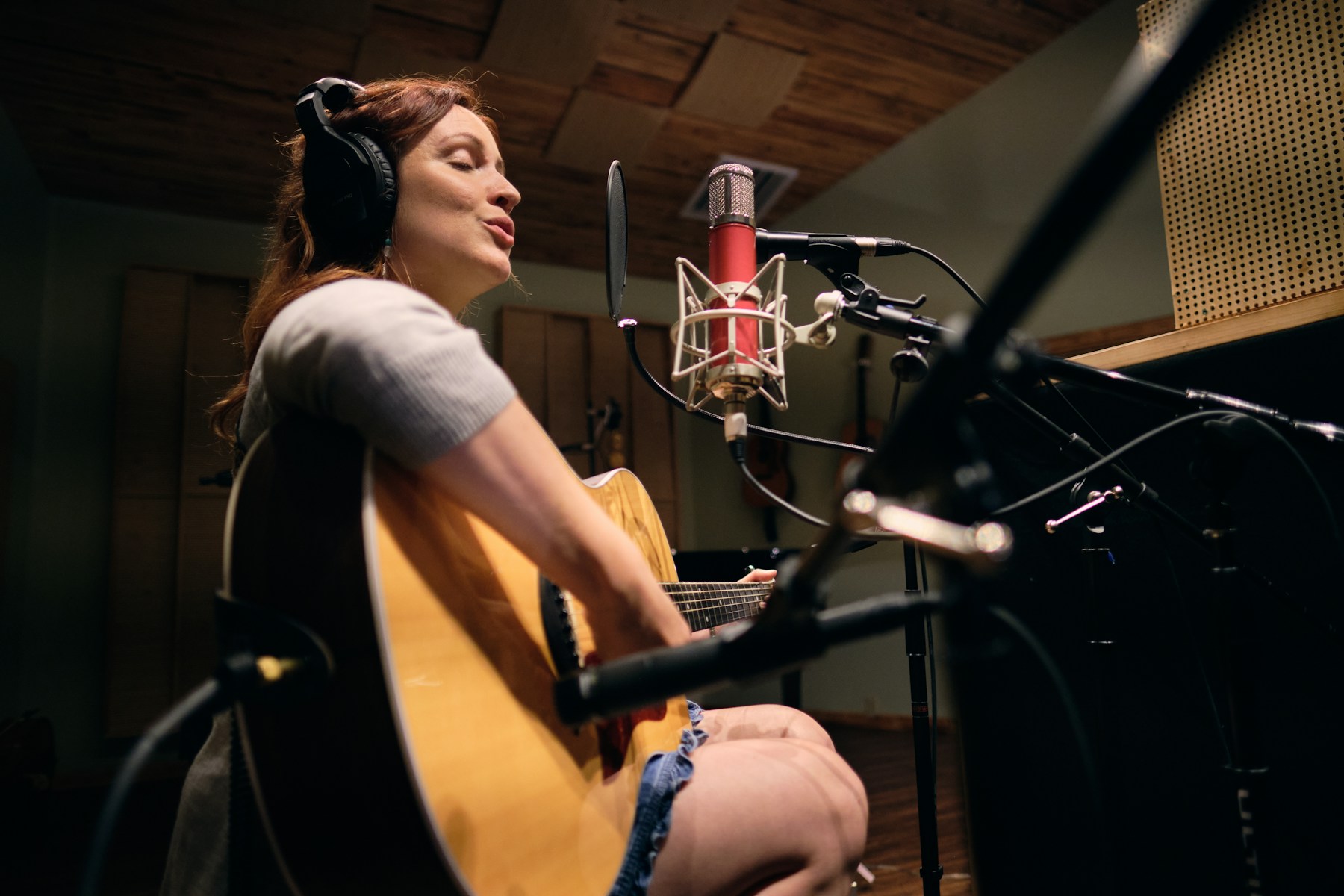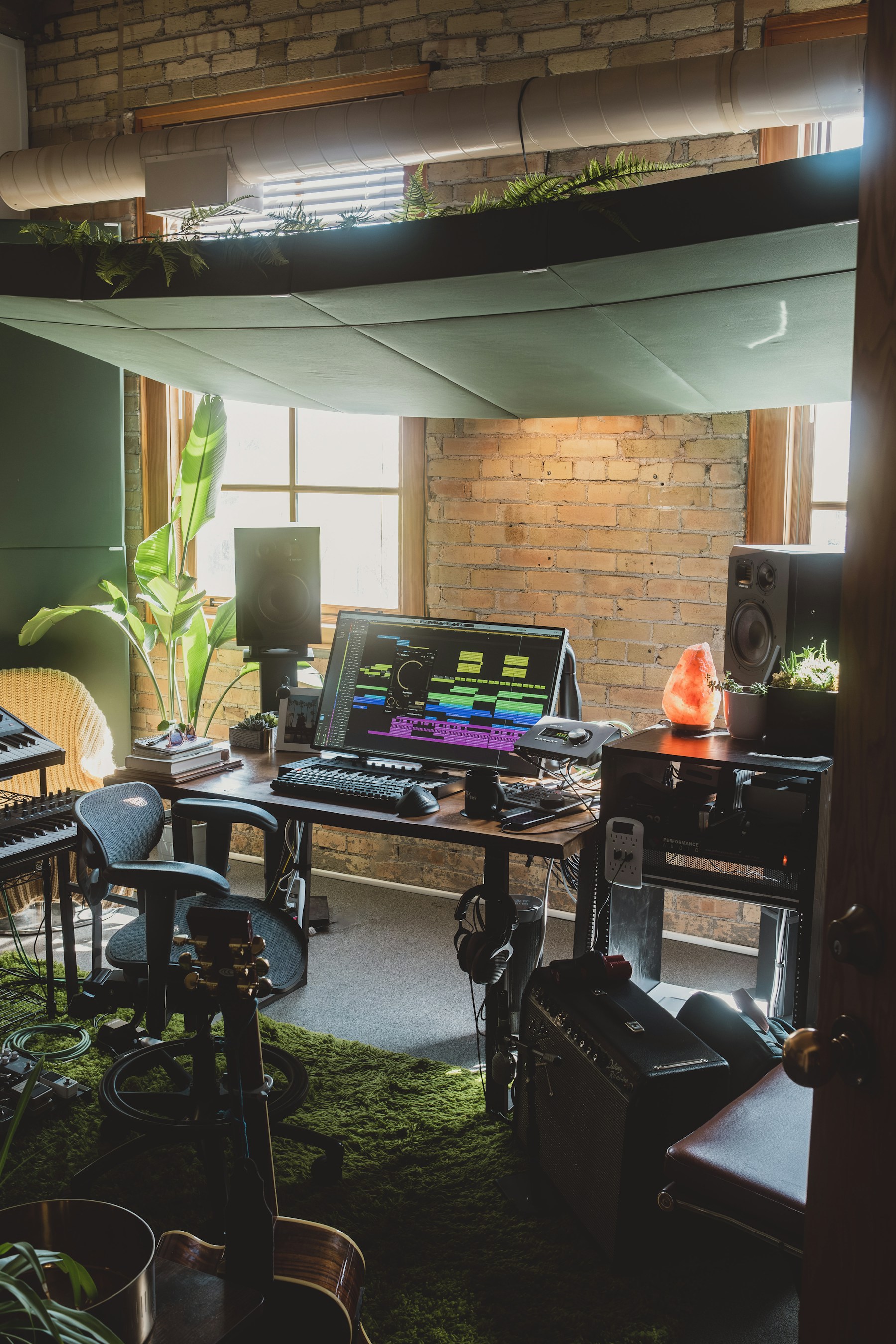
An early recording gives an idea a shape you can return to. It makes the difference between what you intended to play and what you actually hear available for a second listen.
Listen before you repair
It is tempting to hear a first take as a list of mistakes. Try listening once without stopping playback. Let the entire phrase or song pass before writing anything down.
On the next listen, separate the questions. Is the musical idea clear? Is the performance doing what you want? Is the recording making it easy to hear? Those are different problems, and they may need different solutions.
A muffled recording does not necessarily mean the song needs rewriting. A clear recording does not necessarily mean the arrangement has found its shape. Naming the question keeps the next attempt focused.
Find the part worth keeping
Pick one moment you like. It could be the way a phrase lands, a rough harmony, or a rhythmic change that happened without planning. Describe it precisely enough that you can try it again.
Keep the original recording before making changes. Give it a filename that identifies the song and the take. An early version can become a useful reference even if none of its audio reaches a final release.
If you record with others, ask what they heard before presenting your own list. Different people may notice different strengths.
Change one thing
Choose a single adjustment for the next pass. Move the microphone a little. Slow the tempo. Sing the opening phrase more quietly. Leave an instrument out of the first verse.
Then record the same section again and compare at a similar listening volume. Changing several things at once can make it harder to understand which choice helped.
There is no requirement to prefer the newest take. You may learn that the original energy is worth keeping and the recording needs only a practical adjustment.
Know what the recording is for
A writing demo, a rehearsal reference, and a finished release serve different purposes. Decide which one you are making before judging the result.
A writing demo only has to preserve the idea clearly enough to continue working. Once it has done that job, you can put down the recorder and return to making music. The useful first take is the one that helps you decide what to try next.
Put it into practice: Get the free guide